Fynbos heritage
An ancient ritual, gathered by the oldest hands on Earth.
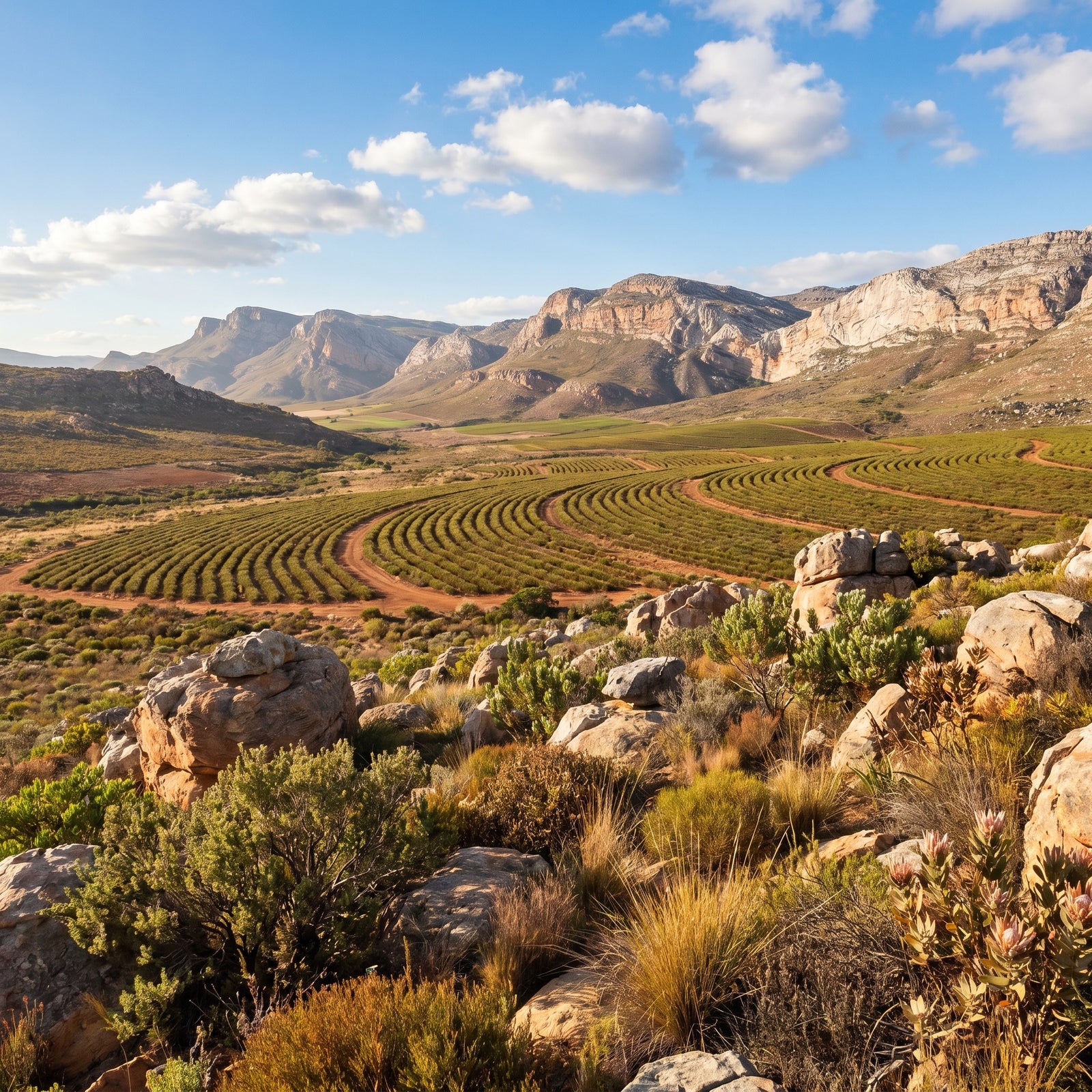
In the rugged Cederberg mountains of South Africa, you step into the fynbos biome - the heart of the Cape Floral Kingdom, one of the most biodiverse plant regions on Earth. This unique landscape is the only place on Earth where wild rooibos grows naturally, and one of the few where wild honeybush still thrives.
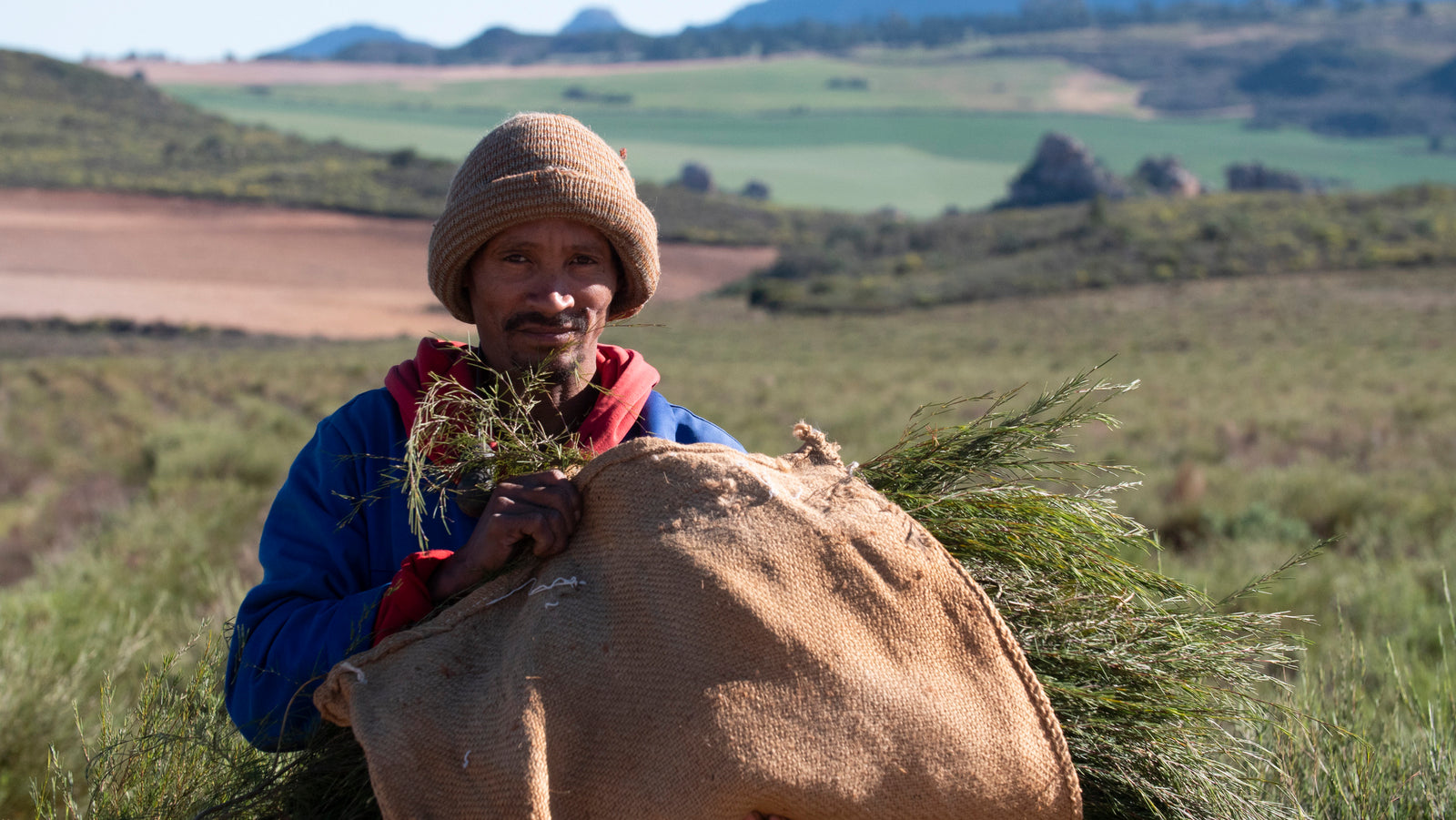
The indigenous Khoi and San peoples - among the oldest cultures on Earth and the first known inhabitants of the Cape region - have lived with and from this landscape for generations. Over centuries, they learned to gather the fine, needle‑like shoots of rooibos and honeybush, bruise and ferment them, then dry them in the hot African sun to draw out their gentle sweetness and soothing qualities, before brewing them as a tea over the fire.

A simple red cup that quietly holds the stories of a nation.
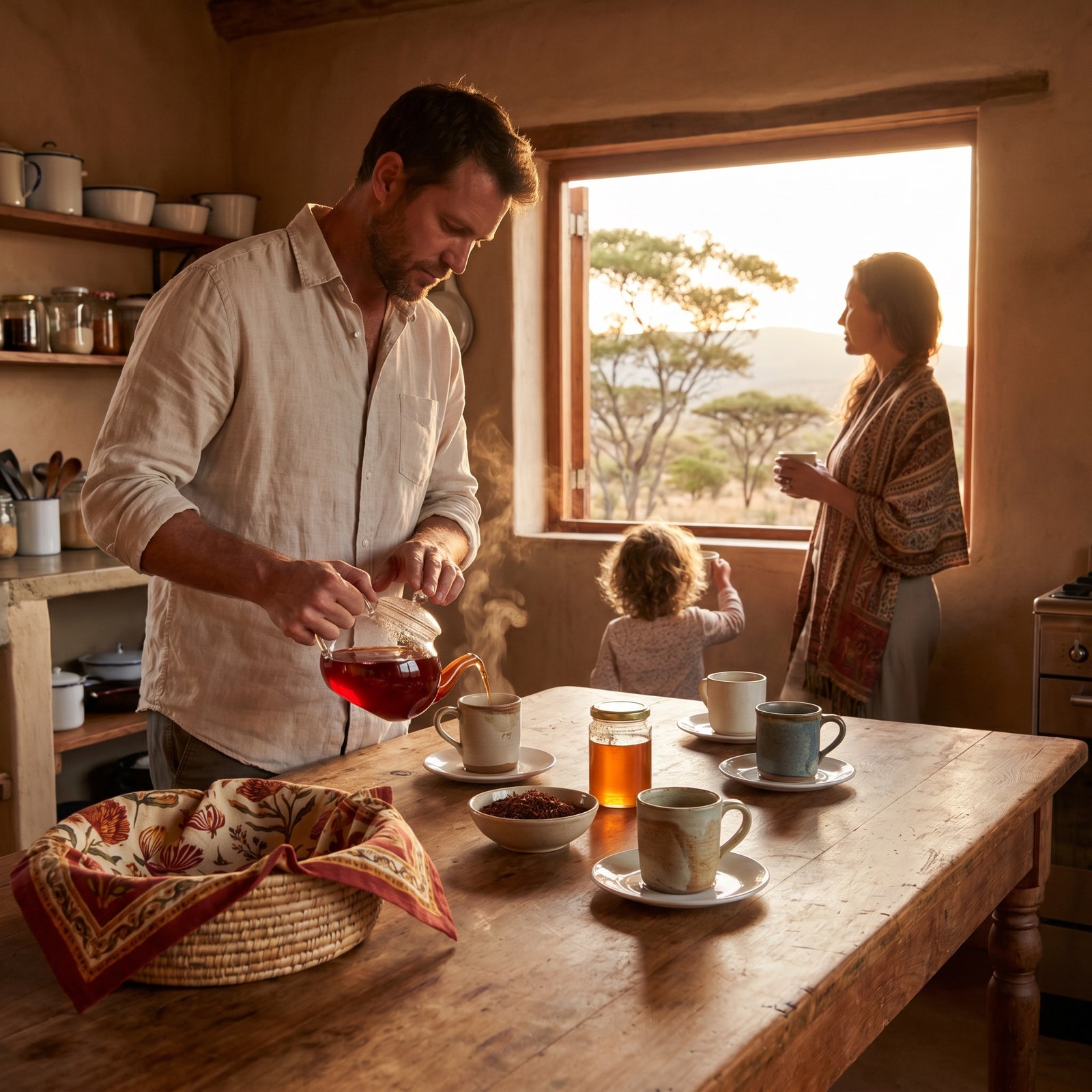
Over time, rooibos and honeybush have travelled far beyond those remote valleys, finding a home in the daily rhythm of South African life. They are poured at breakfast tables and kitchen counters, brewed for afternoon tea or in the quiet of the evening, and even given as a gentle, caffeine-free drink for babies and children.
Enjoyed by South Africans everywhere as a small act of self-care and welcome to others, fynbos teas are cherished as part of South Africa's living heritage - a simple red cup that quietly holds the stories of an ancient people, a diverse nation, and a future still being written.
A few quiet numbers.
An unhurried, seasonal rhythm - still.
Rooibos and honeybush are still grown and gathered in the same wind-washed landscapes that first gave them life. In winter, after the first rains, farmers plant neat rows of young rooibos, then wait through more than a year of sun and storm before the bushes are ready for their first summer harvest.
When the heat returns, workers move through the fields with sickles, cutting the branches about knee-high so the plants can sprout again - bundling the fresh shoots and taking them to be finely cut, moistened, turned, and finally dried under the open African sky to deepen their colour and flavour.
Families on the land, sending a little piece of their landscape out into the world.
Across the Cederberg and beyond, many farmers now choose organic and regenerative methods - no-till fields, natural mulches, and fynbos corridors that protect soil, water, and wildlife for the long term.
FineBush sources from fair-trade-certified co-operatives where growers and drying-yard workers are paid above the regional living wage. That unhurried, seasonal rhythm is present in every drink of fynbos tea - families on the land, watching the weather, tending their fields, and sending a little piece of their landscape out into the world.